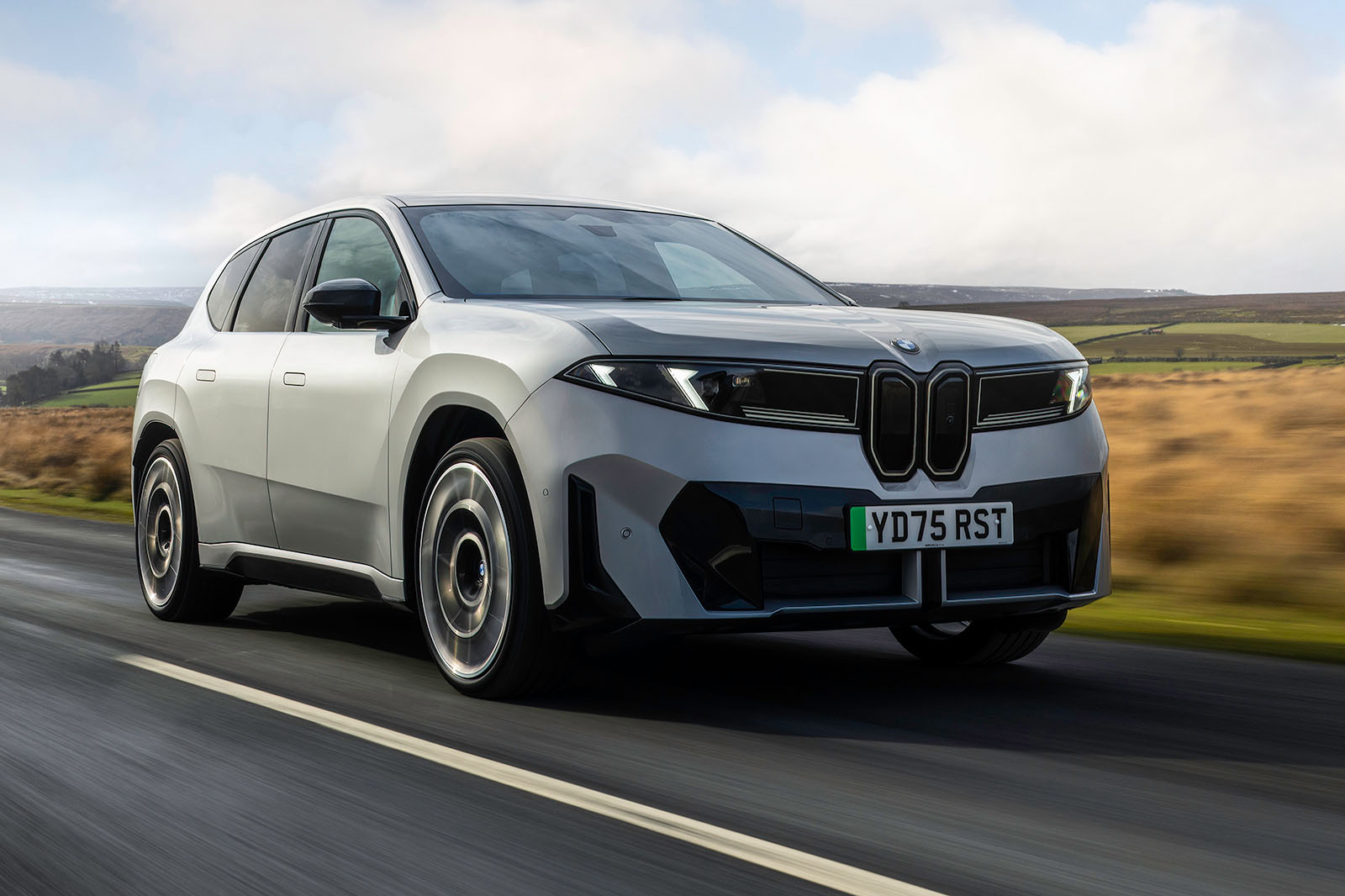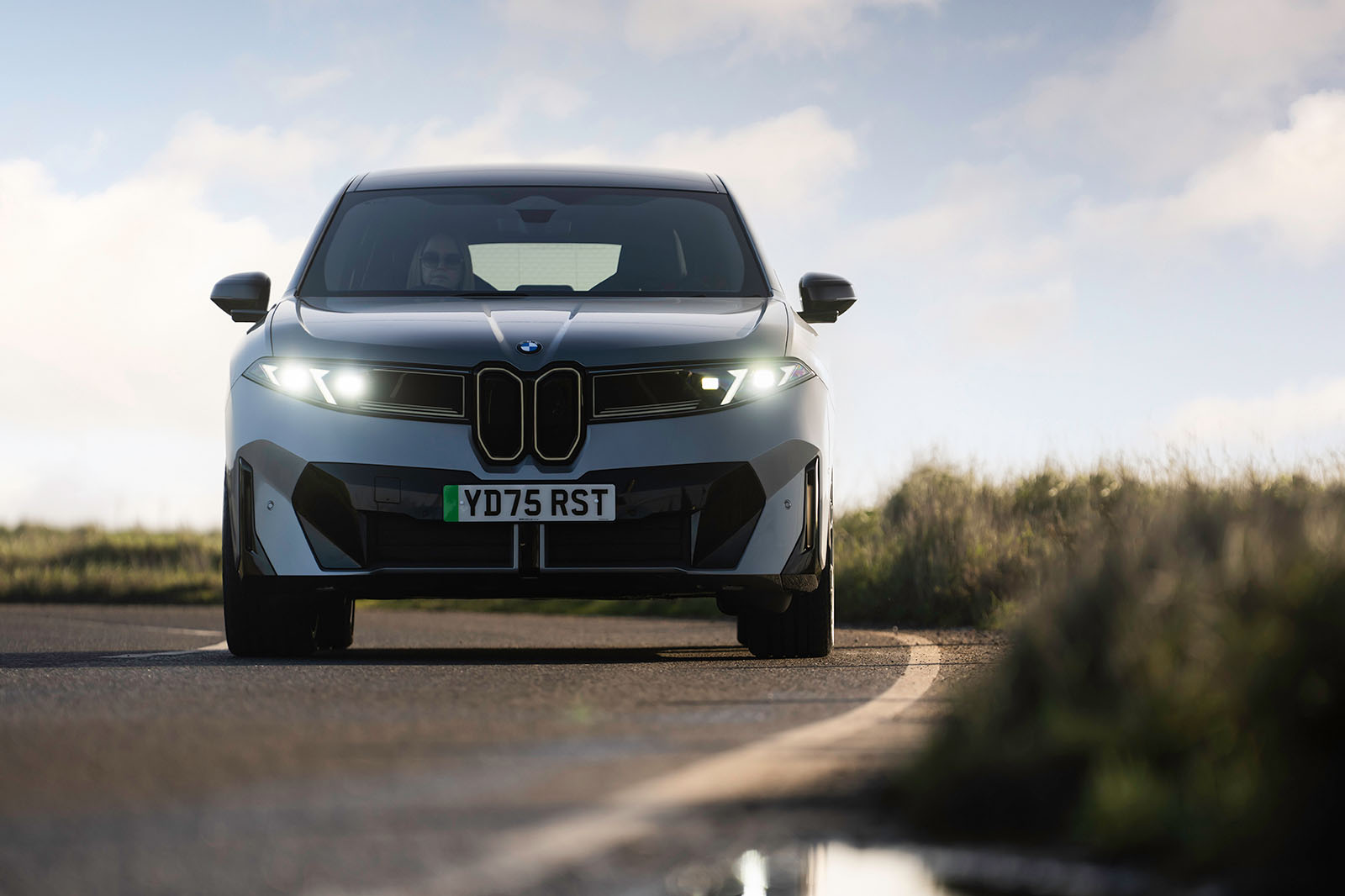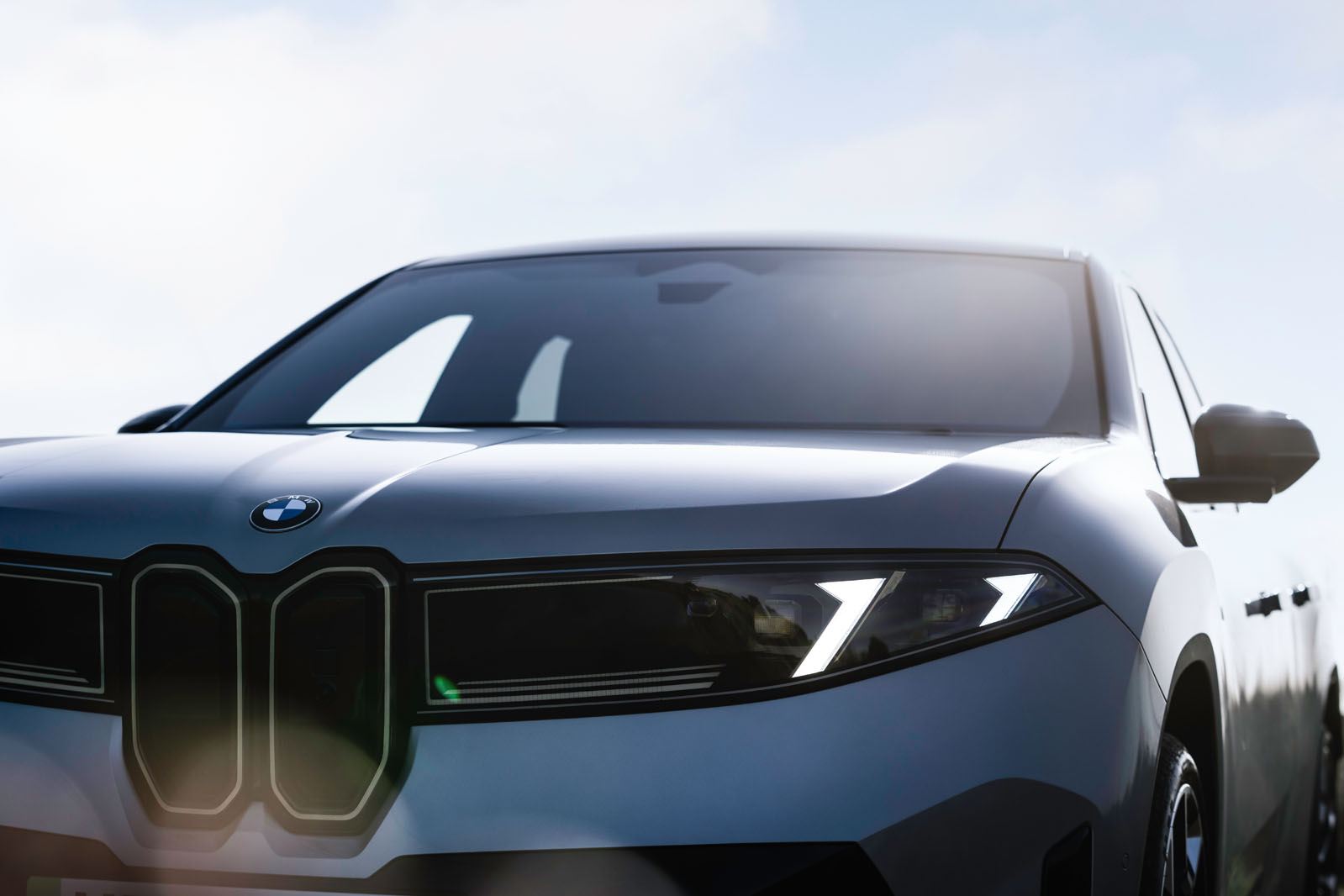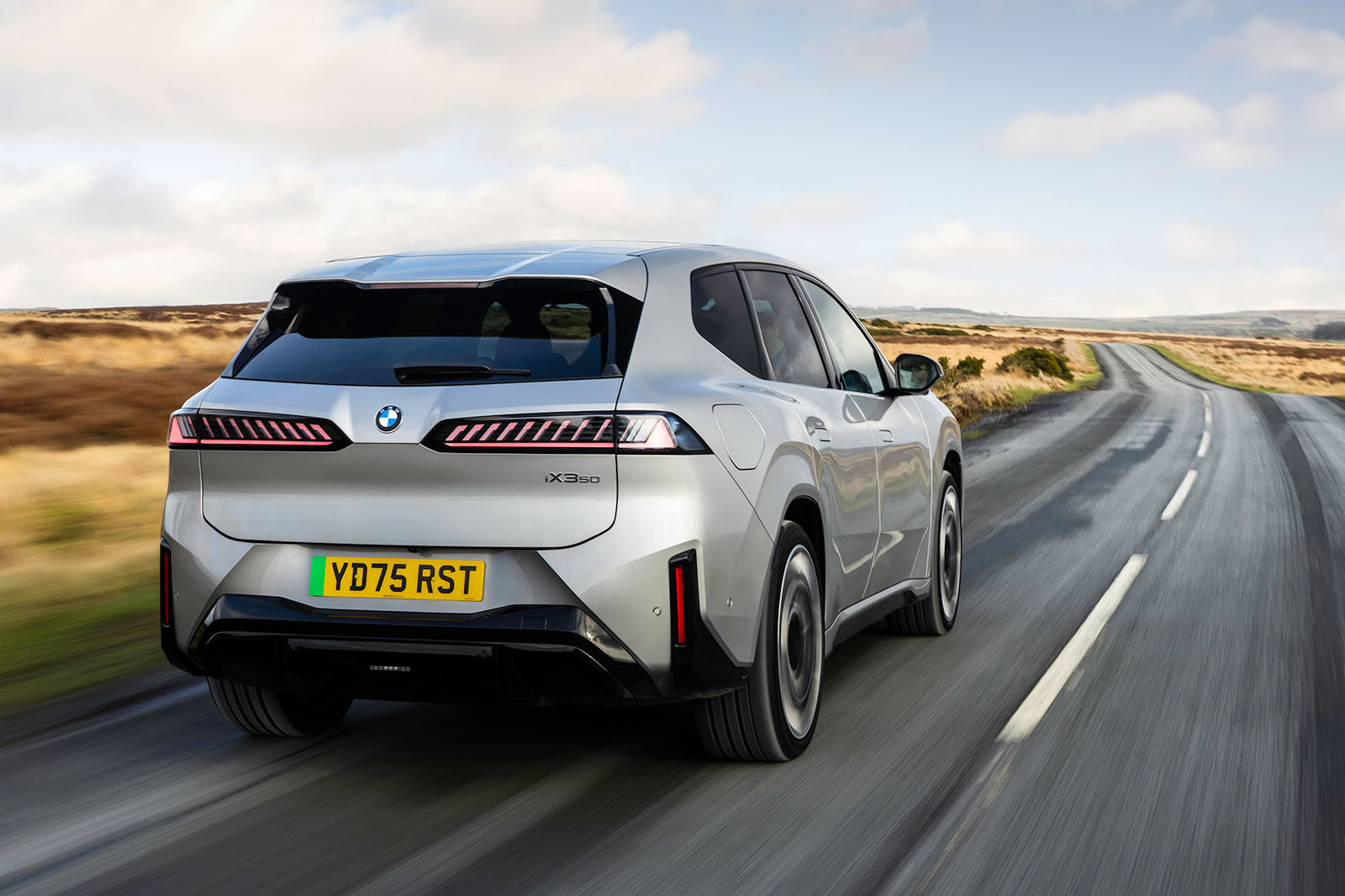
So far we’ve driven only the 50 xDrive model. It has two motors: an 'electrically excited' (read, one than does without permanent magnets) synchronous one at the rear, making 322bhp, and a 165bhp asynchronous motor at the front. This type is less efficient, but is easier to 'idle' when the car only needs single-axle drive.
The powertrain’s integration into the dynamics is what gets BMW’s engineers most excited. They say 98% of all braking can be done through regeneration rather than brake disc use. And because the responses of motor-generators is measured in mere milliseconds and there are fewer masses vibrating or flexibly attached to the chassis, they say they can develop a car that’s linearly, predictably and immediately responsive. And so they have.
The iX3 has lots of accessible thrust, but doesn't rush into motion like it's always in a hurry. It just goes exactly as quickly as you intend, almost exactly when you ask it to. And, quite clearly, it feels like a sporting proposition, even if it's also a family car.
It doesn't offer manually selectable brake energy regeneration paddles, which is an omission we'd flag especially on a car with an agenda for driver engagement; because having regen paddles makes you read the road ahead a bit more attentively than just switching off and letting the car take the strain. Philosophical considerations notwithstanding, of course, there are arguments in favour of both approaches. But it remains odd than BMW continues to decline to offer manual control for those drivers who would simply prefer it. Because that'd be one less thing to dive into the infotainment display to find; because it's a lot slower to adjust it that way; and because simply giving drivers the option wouldn't hurt those who wouldn't take it in any way.
As it is, the iX3 comes back with a more sophisticated 'adaptive' auto regen mode, which is powered by the car's sophisticated ADAS 'superbrain'. It works a little bit like some always-on adaptive cruise control, having a 'soft stop' mode that brings the car to a complete halt in traffic as smoothly as if you'd done it yourself, entirely by managing regen. It's a curious system at times, and a challenge to learn to 'trust' - because it means the car's trailing-throttle behaviour is inherently unpredictable, to a point; though it's seldom at all alarming. The upshot? If you were no particular hurry, you could probably drive this car an awfully long way without ever going near the brake pedal.
— Source: Autocar (https://www.autocar.co.uk/car-review/bmw/ix3)