Click for next article
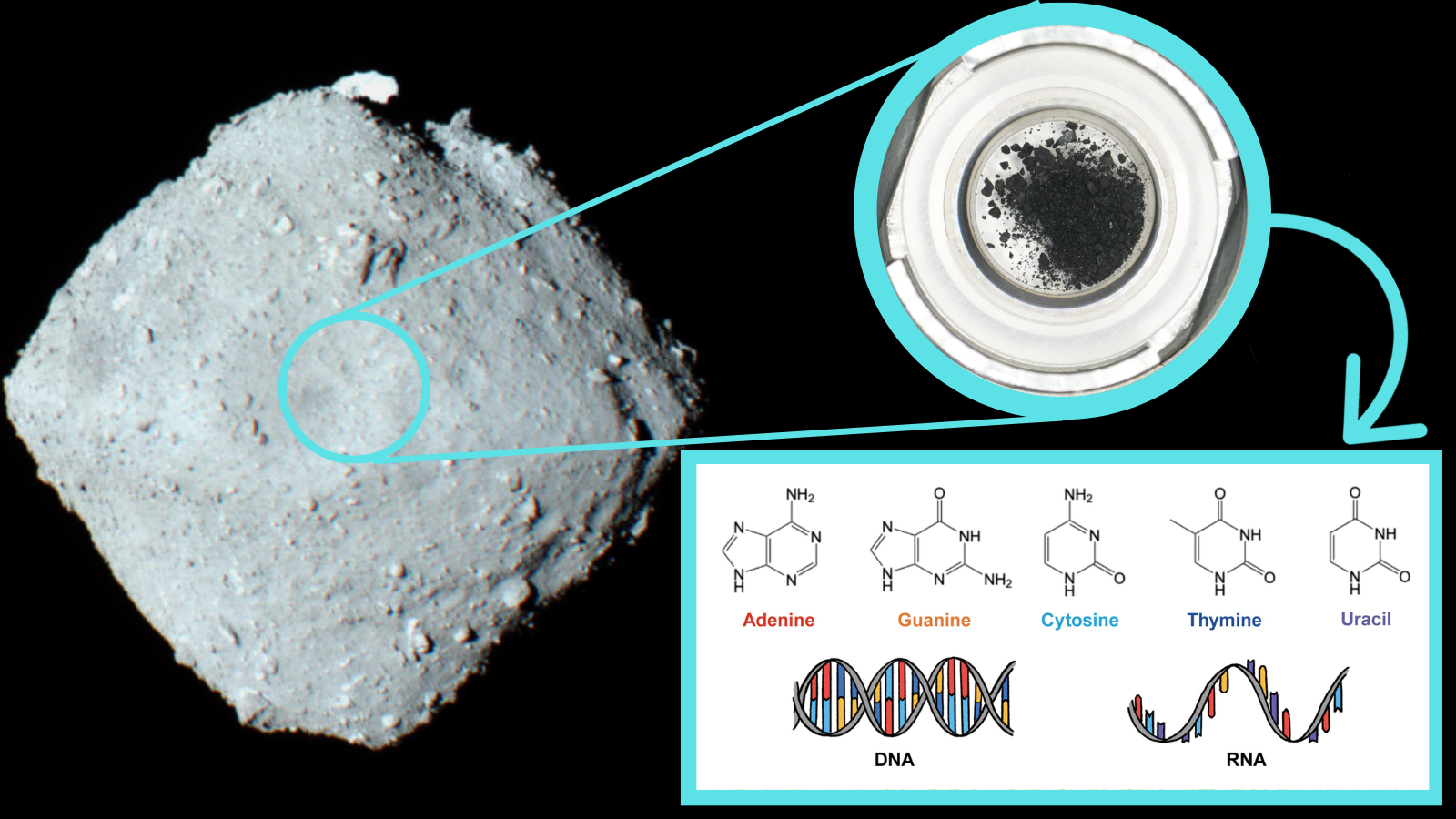
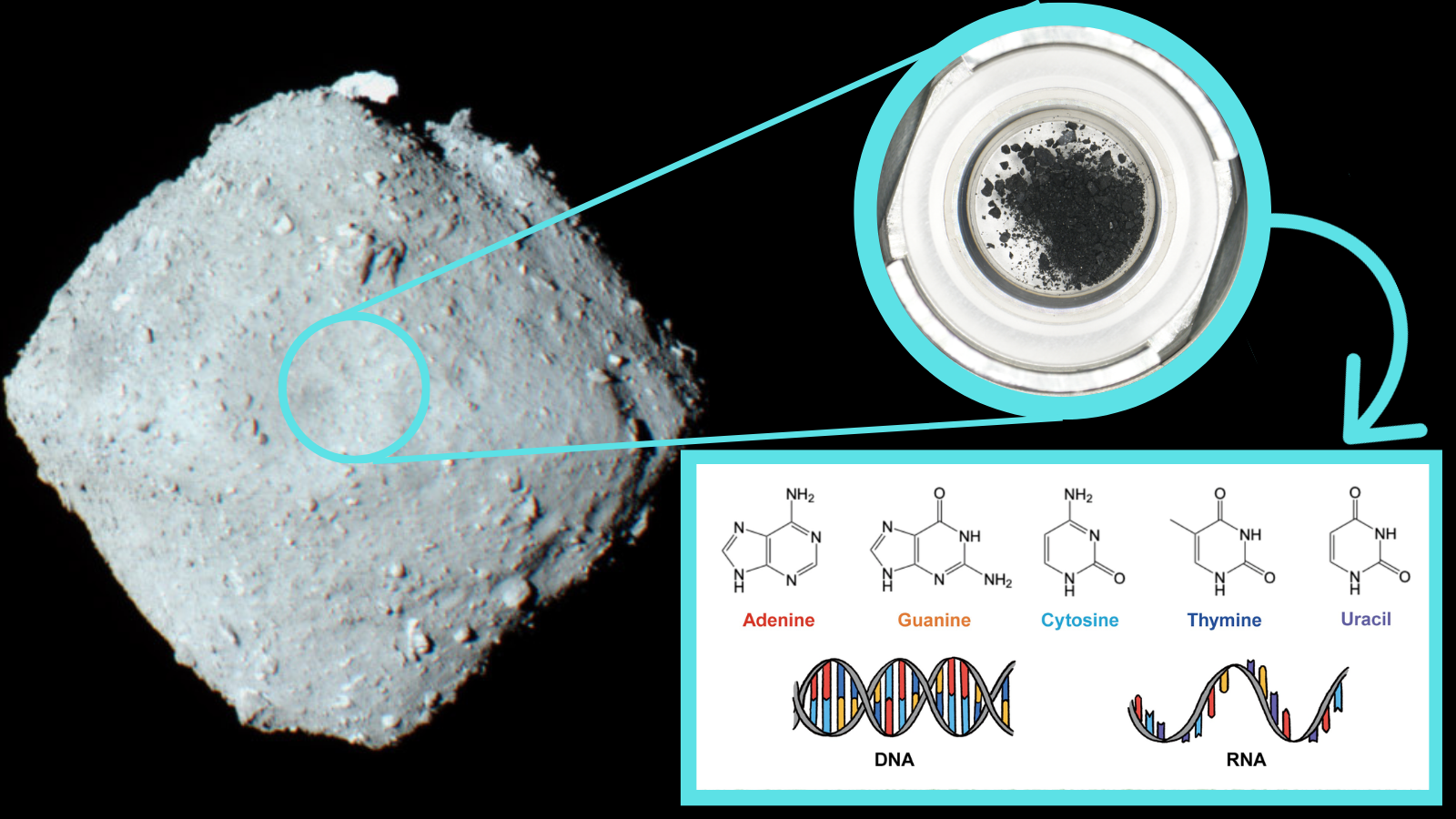
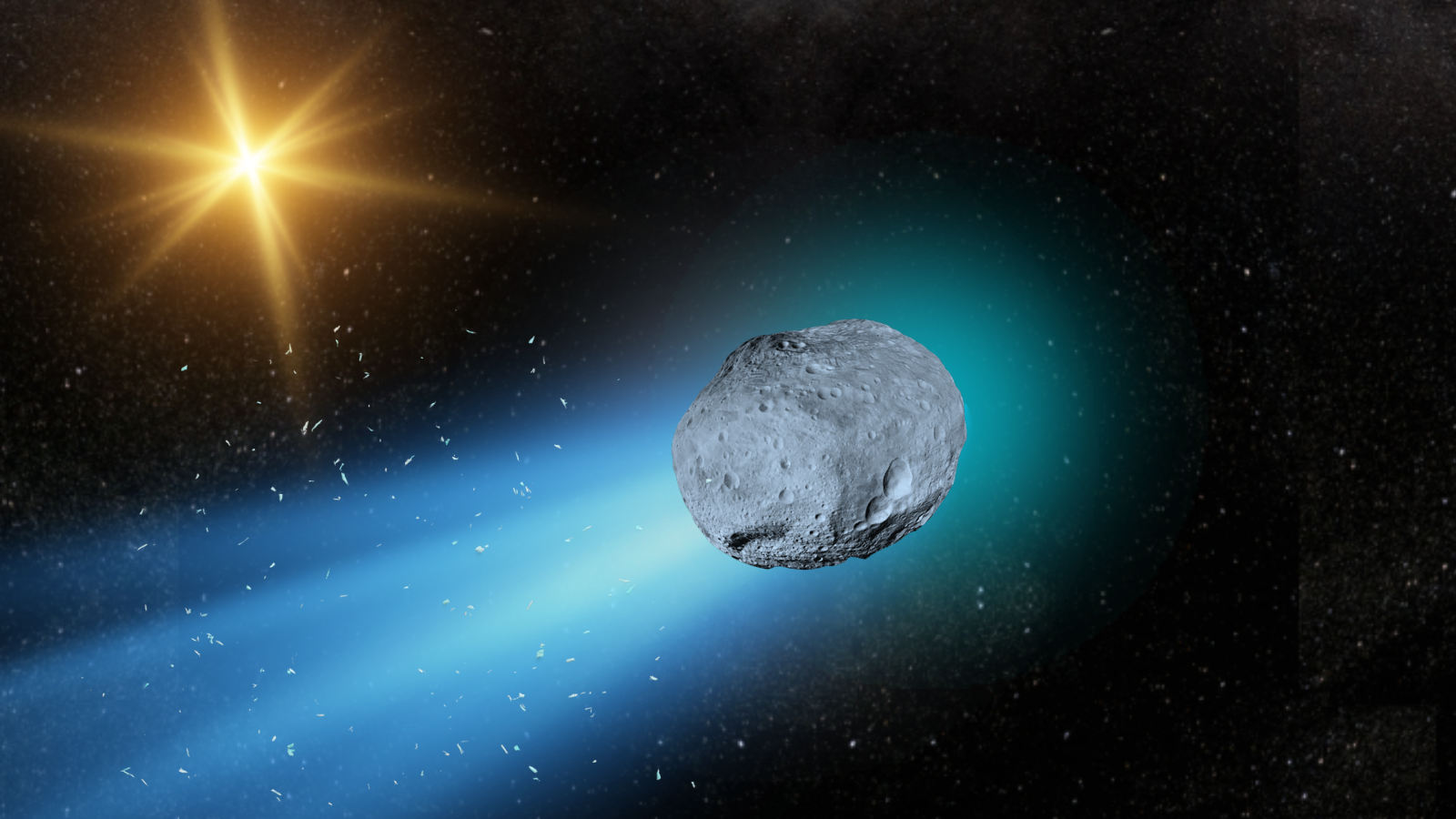
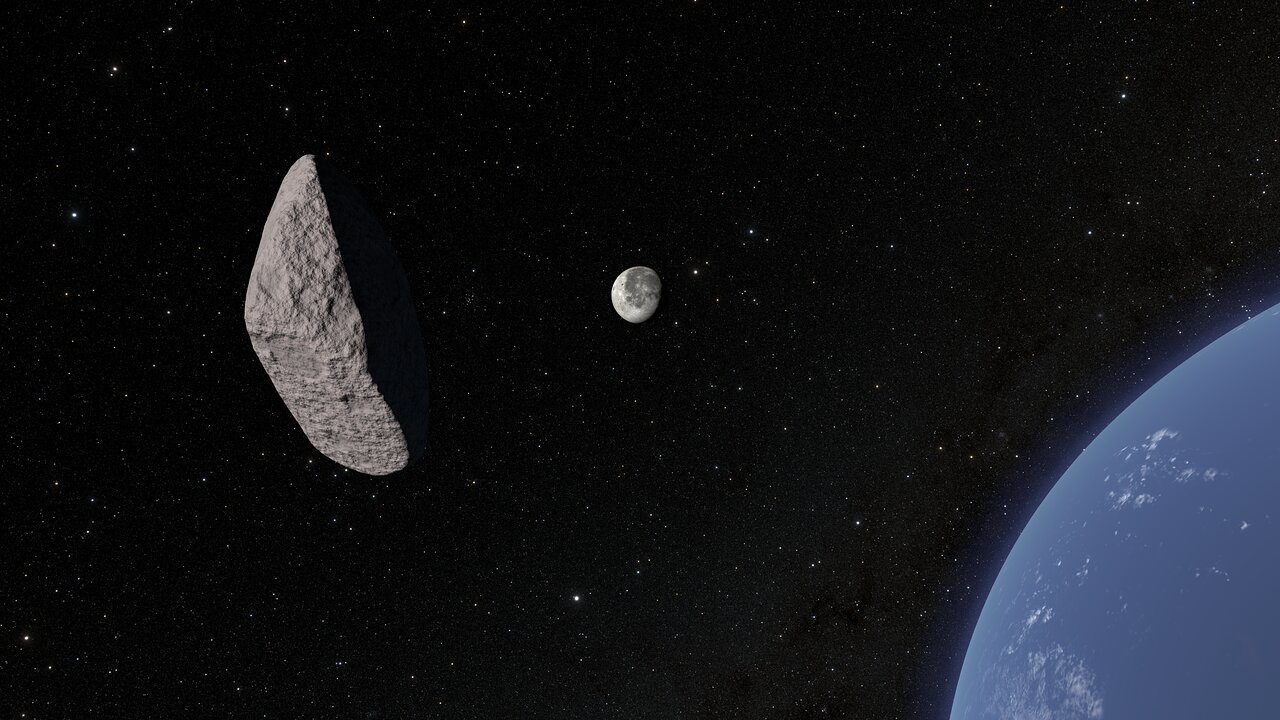
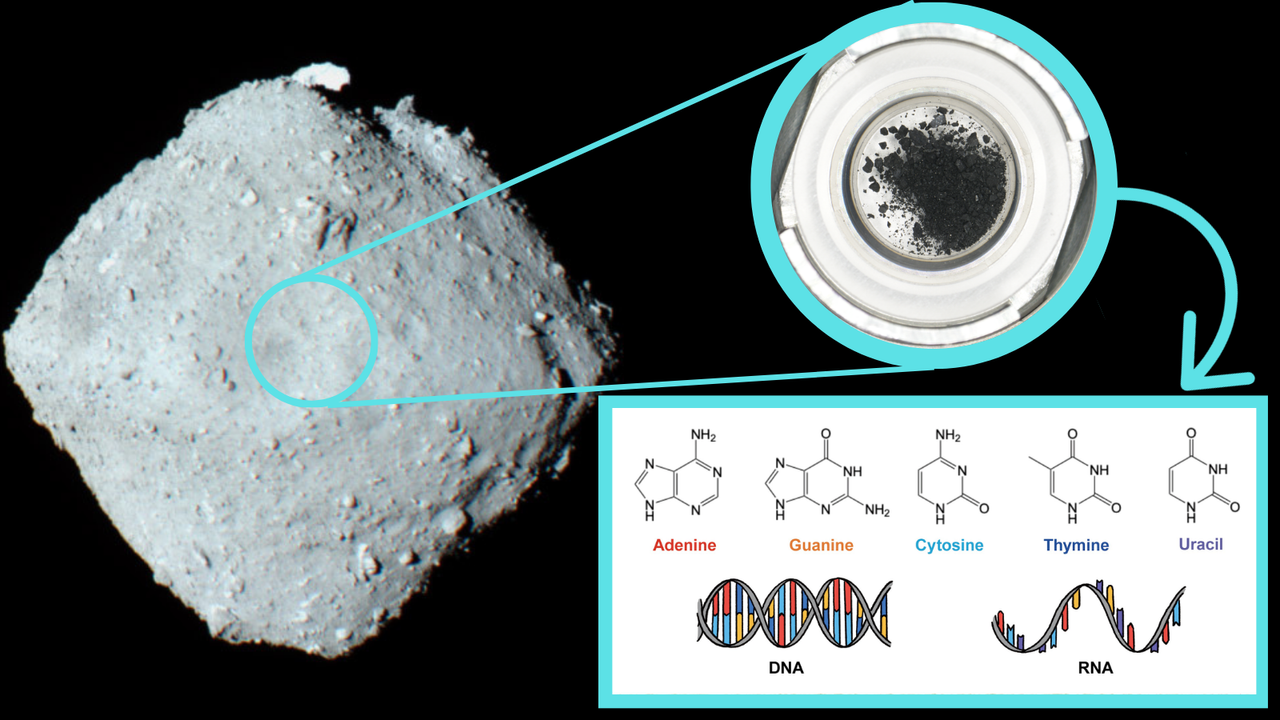
The asteroid Ryugu, a sample collected from it and the five nucleobases of DNA and RNA
Scientists have discovered that a sample of the Ryugu asteroid collected by Japan's Hayabusa 2 spacecraft contains the nucleobases adenine, guanine, cytosine, thymine and uracil, the building blocks of DNA and RNA upon which all life is based.
Because asteroids like Ryugu formed 4.6 billion years ago when the planets were being born around the infant sun, and have remained relatively unspoiled since, the discovery sheds new light on the chemical conditions that existed at the dawn of the solar system.
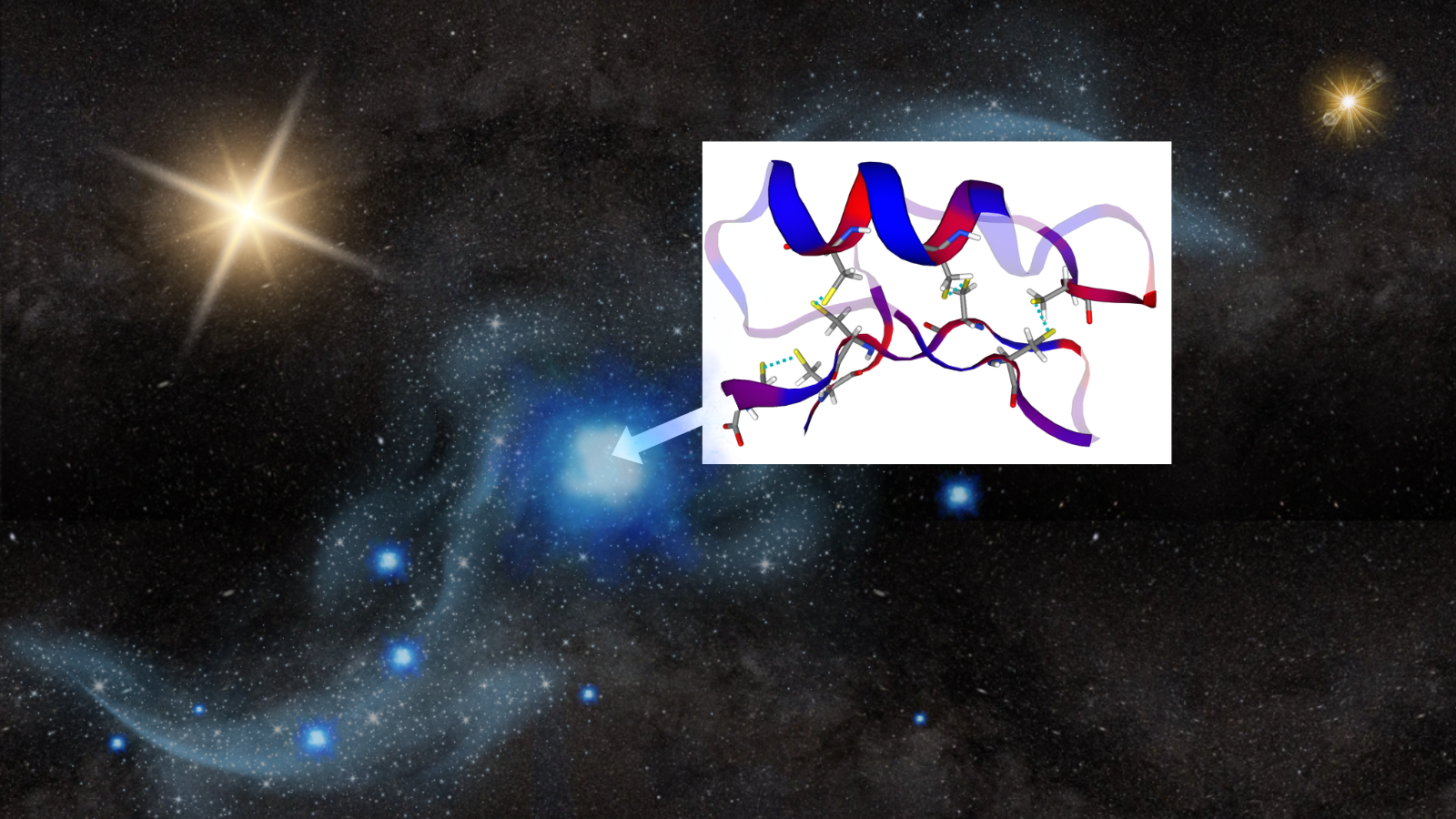
Adenine, guanine, cytosine, and thymine are the four bases of the genetic code that make up the rungs of the double helix structure of DNA by forming specific pairs (adenine pairs with thymine, guanine with cytosine). In RNA, uracil replaces thymine to pair with adenine. The detection of these molecules in an asteroid hints that they can be formed without the presence of life, and may offer clues into how these compounds could be transported across the solar system.
Article continues below
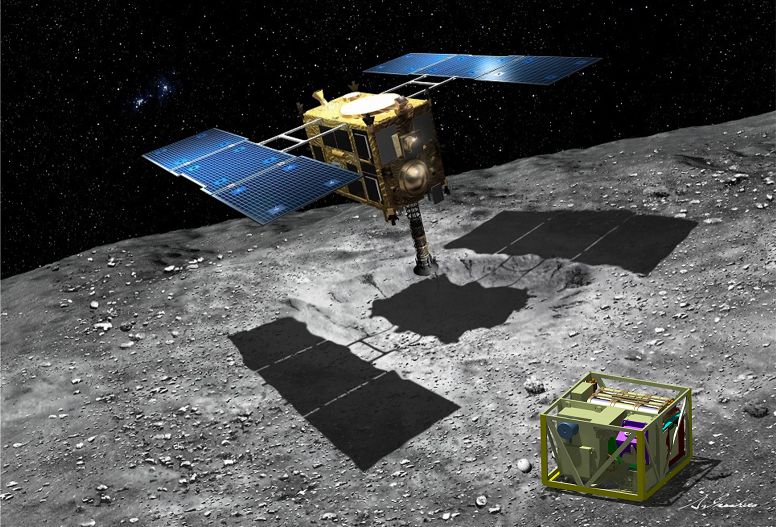
The Japanese Aerospace Agency (JAXA) Hayabusa 2 mission collected samples from the asteroid Ryugu between 2018 and 2019. The spacecraft returned these samples to Earth on Dec. 5, 2020.
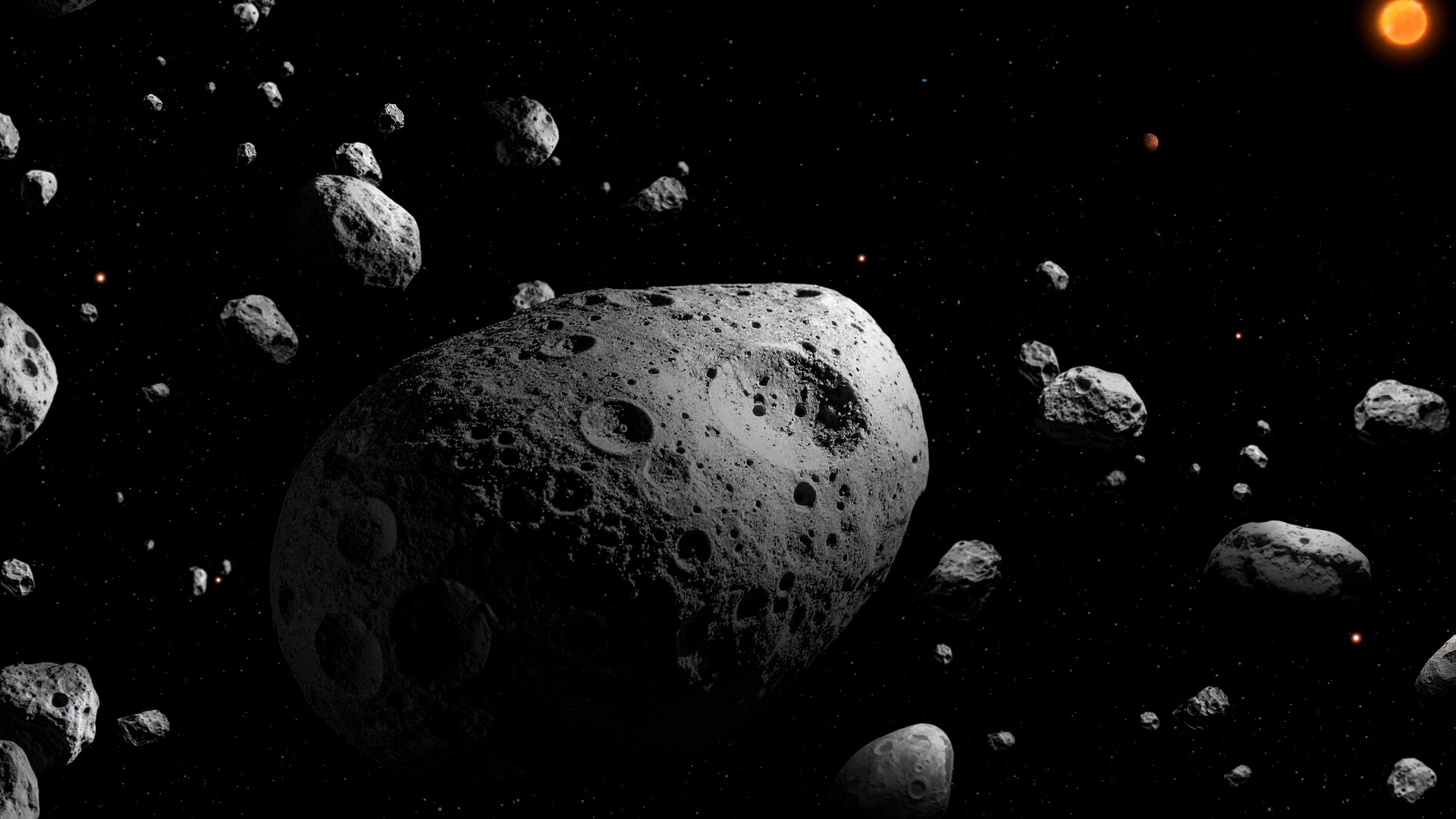
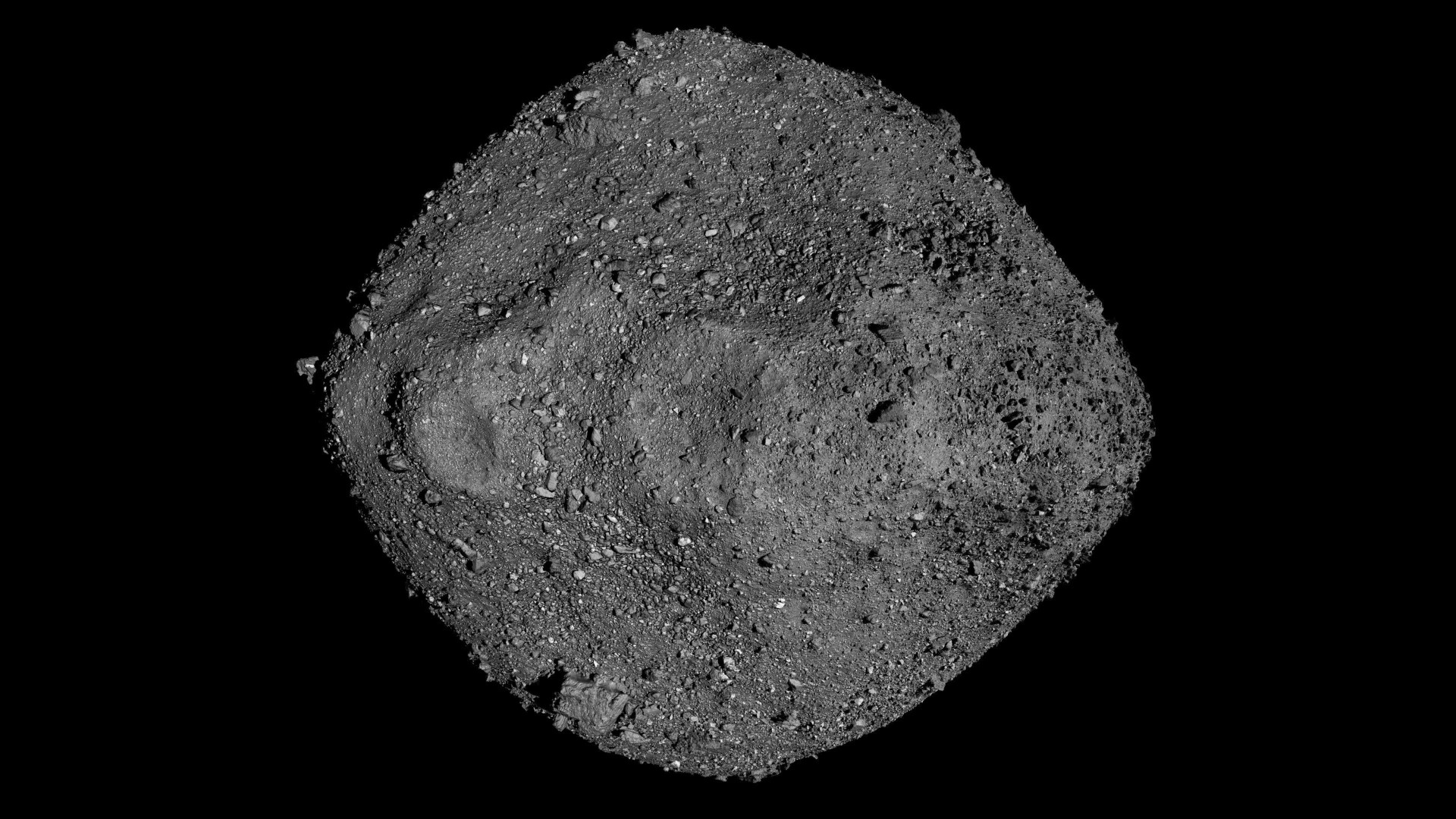
Carbonaceous asteroids like the spinning-top-shaped Ryugu contain what is effectively a "fossil record" of unspoiled material from the earliest era of the solar system, hence why scientists are so keen to get them back here to Earth to study up close and in person.
The study of the two samples returned to Earth has previously demonstrated that Ryugu once had liquid water flowing across its surface, strengthening the theory that these space rocks may have delivered water to the surface of our planet.
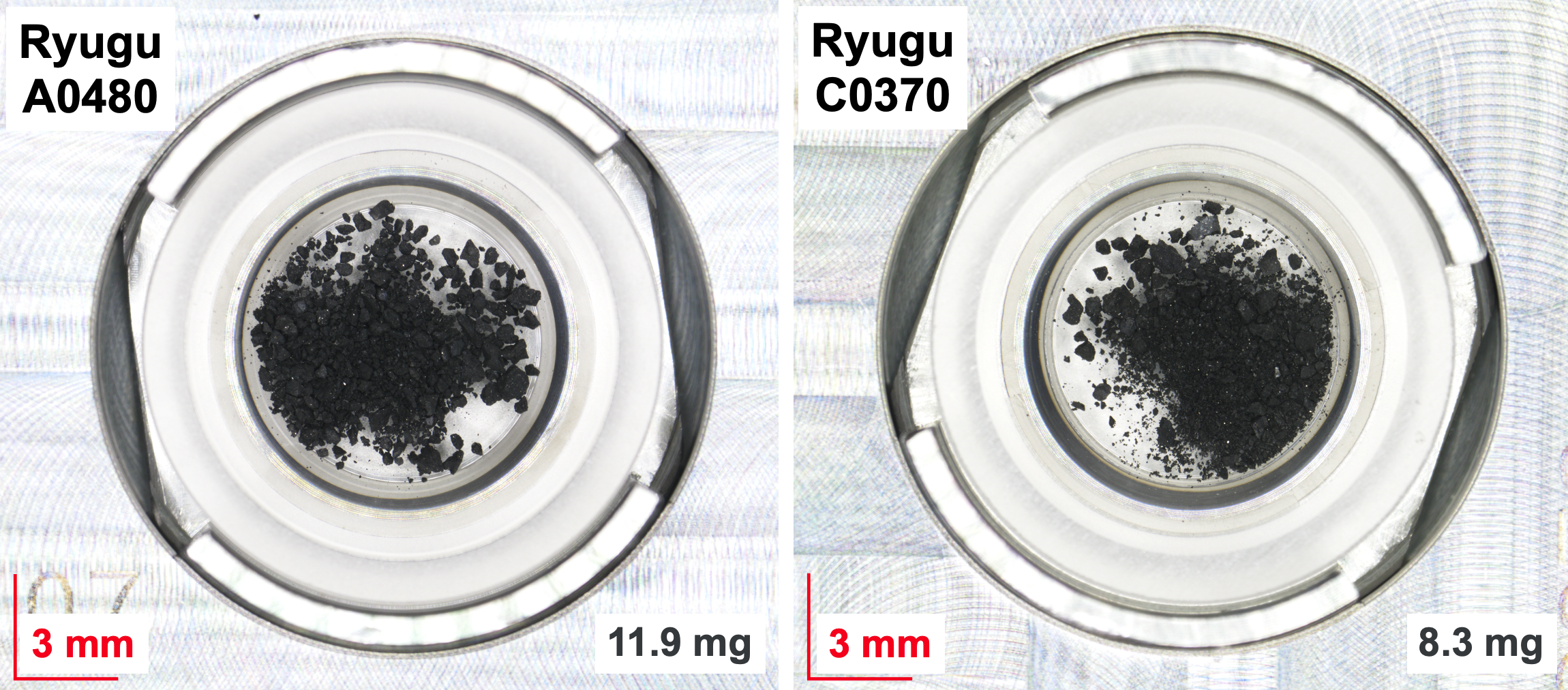
Samples of asteroid Ryugu brought back to Earth (Image credit: JAXA/JAMSTEC)
This team, led by JAXA biogeochemist Toshiki Koga, analysed two Ryugu samples returned by Hayabusa 2, finding adenine, guanine, cytosine, thymine, and uracil. The results were compared to findings reached when researchers studied samples returned from the asteroid Bennu, and to investigations of the Murchison and Orgueil meteorites, collected from Australia in 1969, and France in 1864, respectively. The team discovered significant differences in the concentrations of nucleobases.
Ryugu contains roughly comparable amounts of the nucleobases, adenine and guanine (known as purines), to cytosine, thymine, and uracil (pyrimidines). Murchison, however, is richer in purine nucleobases, while Orgeuil samples from Bennu are richer in pyrimidine nucleobases.
Get the Space.com Newsletter Breaking space news, the latest updates on rocket launches, skywatching events and more! Contact me with news and offers from other Future brands Receive email from us on behalf of our trusted partners or sponsors
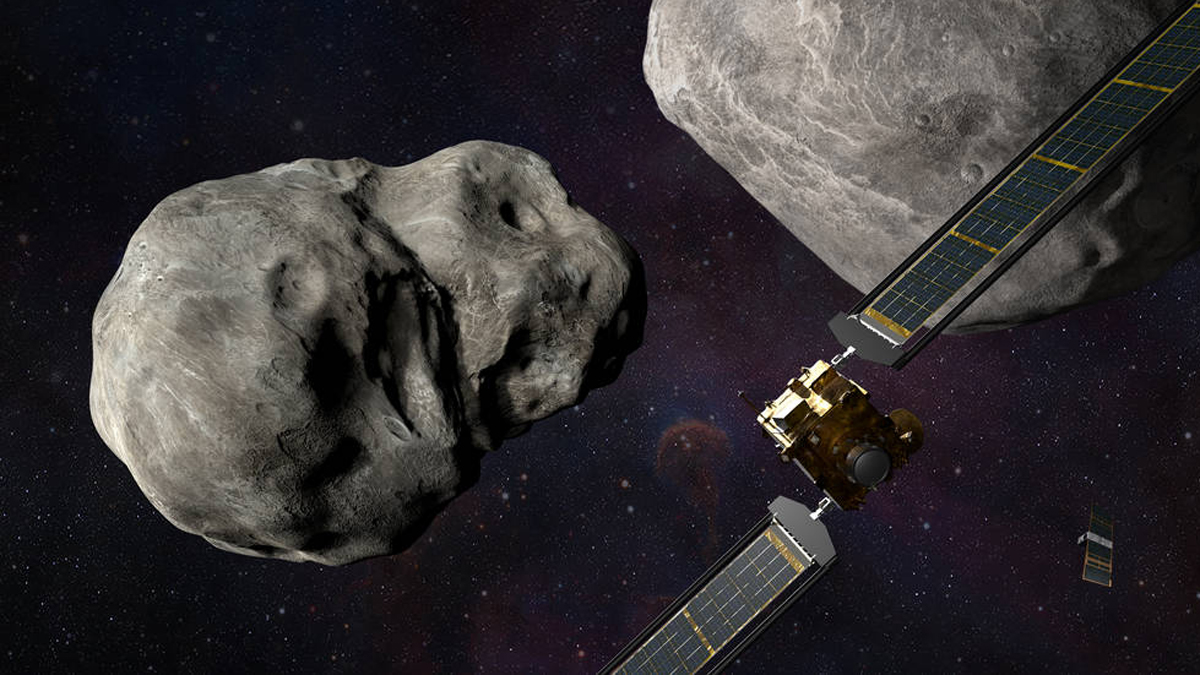
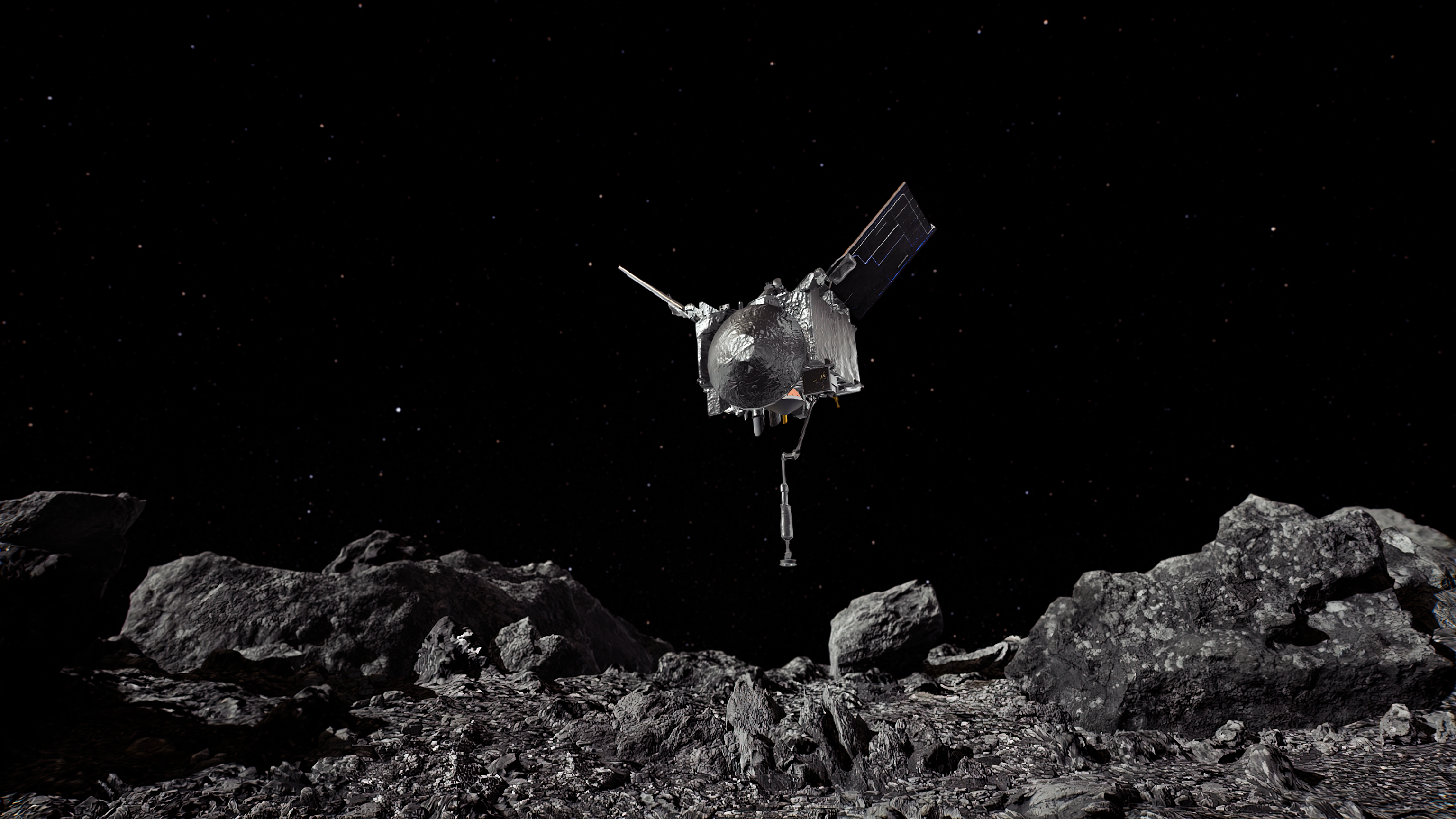
Artist's concept of Japan's Hayabusa 2 spacecraft collecting samples from Ryugu (Image credit: JAXA)
These disparities could reflect the different evolutionary histories and environmental birthplaces of Ryugu, Bennu, and the parent bodies of the Murchison and Orgeuil samples. The research further emphasizes the role asteroids likely played in building the chemical diversity that allowed life to arise on Earth.
Perhaps the most significant result of this study is the implication that the building blocks of DNA and RNA are widely dispersed through the solar system.
— Source: Space.com (https://www.space.com/astronomy/asteroids/ryugu-asteroid-sample-contains-all-five-key-components-of-dna-scientists-find)